Creating a Windows application in Java using Eclipse
Step 1: Create a new Java Application
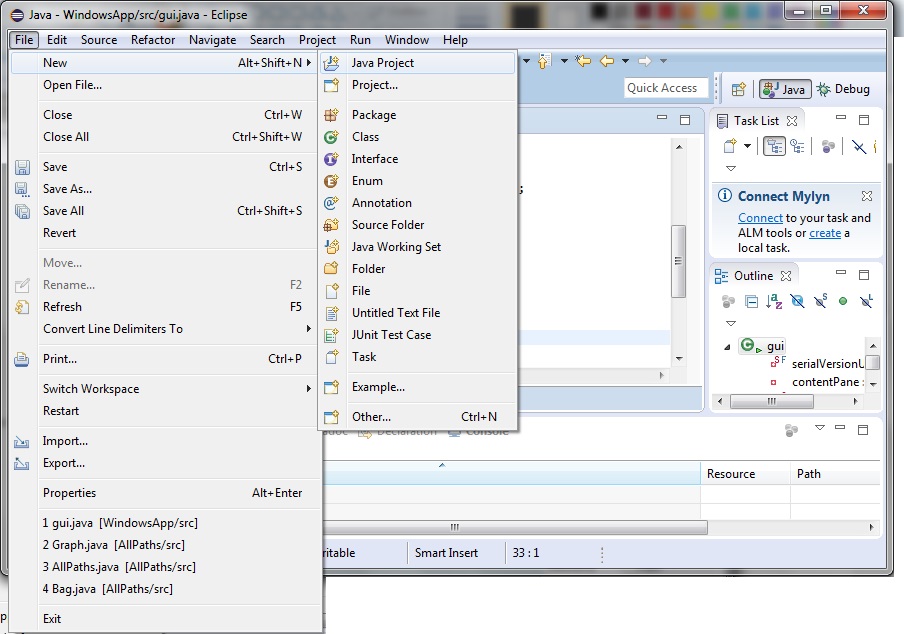
In Eclipse select File > New > Java Project:
 Step 2: Create a new Frame
In Eclipse, right click the 'src' folder and select New > Other.
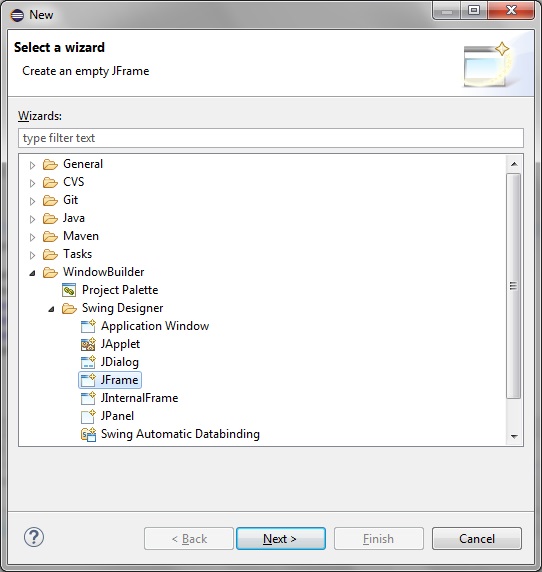
In the wizard dialog that appears select WindowBuilder > Swing Designer > JFrame:
Step 2: Create a new Frame
In Eclipse, right click the 'src' folder and select New > Other.
In the wizard dialog that appears select WindowBuilder > Swing Designer > JFrame:
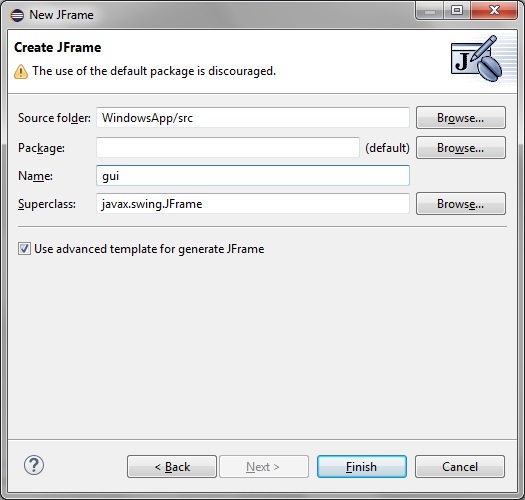
 Click Next. Give your JFrame a name:
 Click Finish.
Note how the following code for gui.java gets generated:
[code language="java"]
import java.awt.BorderLayout;
public class gui extends JFrame {
private JPanel contentPane;
/**
* Launch the application.
*/
public static void main(String[] args) {
EventQueue.invokeLater(new Runnable() {
public void run() {
try {
gui frame = new gui();
frame.setVisible(true);
} catch (Exception e) {
e.printStackTrace();
}
}
});
}
/**
* Create the frame.
*/
public gui() {
setDefaultCloseOperation(JFrame.EXIT_ON_CLOSE);
setBounds(100, 100, 450, 300);
contentPane = new JPanel();
contentPane.setBorder(new EmptyBorder(5, 5, 5, 5));
contentPane.setLayout(new BorderLayout(0, 0));
setContentPane(contentPane);
}
}
[/code]
Step 3: Build and fix compiler warnings
Note also when building the project we get the one warning:
"The serializable class gui does not declare a static final serialVersionUID field of type long gui.java /WindowsApp/src line 9 Java Problem"
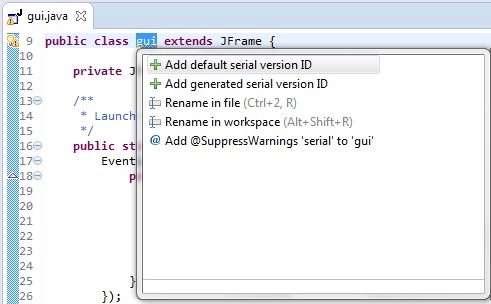
Click your mouse pointer over by the warning symbol and allow Eclipse to correct it:
Click Finish.
Note how the following code for gui.java gets generated:
[code language="java"]
import java.awt.BorderLayout;
public class gui extends JFrame {
private JPanel contentPane;
/**
* Launch the application.
*/
public static void main(String[] args) {
EventQueue.invokeLater(new Runnable() {
public void run() {
try {
gui frame = new gui();
frame.setVisible(true);
} catch (Exception e) {
e.printStackTrace();
}
}
});
}
/**
* Create the frame.
*/
public gui() {
setDefaultCloseOperation(JFrame.EXIT_ON_CLOSE);
setBounds(100, 100, 450, 300);
contentPane = new JPanel();
contentPane.setBorder(new EmptyBorder(5, 5, 5, 5));
contentPane.setLayout(new BorderLayout(0, 0));
setContentPane(contentPane);
}
}
[/code]
Step 3: Build and fix compiler warnings
Note also when building the project we get the one warning:
"The serializable class gui does not declare a static final serialVersionUID field of type long gui.java /WindowsApp/src line 9 Java Problem"
Click your mouse pointer over by the warning symbol and allow Eclipse to correct it:
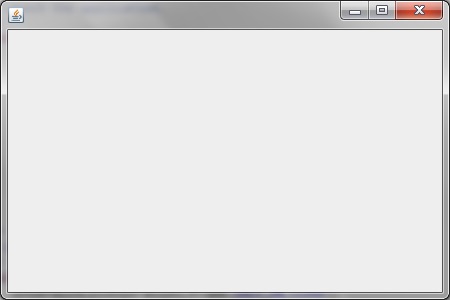
 On building and running the project we have our bare minimum Windows application as shown:
Step 2: Create a new Frame
In Eclipse, right click the 'src' folder and select New > Other.
In the wizard dialog that appears select WindowBuilder > Swing Designer > JFrame:
Click Next. Give your JFrame a name:
Click Finish.
Note how the following code for gui.java gets generated:
[code language="java"]
import java.awt.BorderLayout;
public class gui extends JFrame {
private JPanel contentPane;
/**
* Launch the application.
*/
public static void main(String[] args) {
EventQueue.invokeLater(new Runnable() {
public void run() {
try {
gui frame = new gui();
frame.setVisible(true);
} catch (Exception e) {
e.printStackTrace();
}
}
});
}
/**
* Create the frame.
*/
public gui() {
setDefaultCloseOperation(JFrame.EXIT_ON_CLOSE);
setBounds(100, 100, 450, 300);
contentPane = new JPanel();
contentPane.setBorder(new EmptyBorder(5, 5, 5, 5));
contentPane.setLayout(new BorderLayout(0, 0));
setContentPane(contentPane);
}
}
[/code]
Step 3: Build and fix compiler warnings
Note also when building the project we get the one warning:
"The serializable class gui does not declare a static final serialVersionUID field of type long gui.java /WindowsApp/src line 9 Java Problem"
Click your mouse pointer over by the warning symbol and allow Eclipse to correct it:
On building and running the project we have our bare minimum Windows application as shown:


Comments
Post a Comment